Research Article
Aim & Scope
The European Annals of Dental Sciences (EADS) is an international scientific journal dedicated to the advancement of research in the fields of dentistry, oral surgery, and medicine. Our principal aim is to foster and promote quality research in these disciplines, with an overarching commitment to contributing to the continuous development of academic, scientific, and social discourse. We strive to provide a dynamic platform for researchers and clinicians alike to share and discuss innovative findings, treatment methodologies, and clinical techniques.
EADS is the official journal of the Ankara University, Faculty of Dentistry. Our scope spans the broad spectrum of dental, oral, and facial health, emphasizing the propagation of novel and pertinent information that is directly applicable to both research and practice. The journal invites original scientific articles, clinical reports, and systematic reviews that contribute significantly to the existing knowledge base.
Our mission is not only to act as an effective medium for the transmission of contemporary research and knowledge on a global scale but also to stimulate discussions on evidence-based treatment concepts, thereby fostering a collaborative environment conducive to learning and advancement in these fields. The European Annals of Dental Sciences is committed to upholding the highest standards of scientific integrity and rigor, ensuring that all published works contribute constructively to the domain of dental sciences.
The readership of the European Annals of Dental Sciences is diverse, including researchers, academicians, practicing clinicians, dental surgeons, oral health professionals, postgraduate students, and health policy makers. The journal appeals to individuals seeking to stay abreast of the latest developments and innovations in dentistry, oral surgery, and associated medical fields. Its in-depth and evidence-based content serves as a reliable resource for professionals aiming to improve their practice and for researchers keen on enhancing their understanding of current trends and future directions in these domains.
Author Guidelines
Ethical Principles and Publication Policy
EUROPEAN ANNALS OF DENTAL SCIENCES ETHICAL POLICIES
Data sharing and bioethics
Human and animal experiments
For original research manuscripts reporting experiments on animals, the corresponding author must confirm that all experiments were performed in accordance with relevant guidelines and regulations. The manuscript must include a statement identifying the institutional and/or licensing committee approving the experiments, including any relevant details regarding animal welfare, patient anonymity, drug side effects, and informed consent.
For experiments involving human subjects, authors must identify the committee (e.g., Institutional Review Board [IRB]) approving the experiments and include with their submission a statement confirming that informed consent was obtained from all subjects. All human studies must adhere to the principles set out in the Declaration of Helsinki (World Medical Association Declaration of Helsinki, published online October 19, 2013. doi:10.1001/jama.2013.281053).
It is the author’s responsibility to ensure that a patient’s anonymity be carefully protected and to verify that any experimental investigation with human subjects reported in the manuscript was performed with informed consent and following all the guidelines for experimental investigation with human subjects required by the institution(s) with which all the authors are affiliated. All identifying details (patient names and/or initials and name of specific hospital unit) should be removed from the text, tables, and/or radiographs or other figures. Patients should be assigned numbers instead. Identifying data should be removed from a manuscript unless important clinically or epidemiologically. Clinically and epidemiologically significant details include: race, sex, age, occupation, country or region of origin, and/or sexual orientation. Note that the same information must be given for each patient or group. If any individual data is included, written consent for participation/publication must be given for each patient or group.
If any individual data is included (i.e., an identifiable full-face picture in a clinical report), written consent for participation/publication must be obtained from every individual whose data is included. A written statement attesting that the author has received and archived such written patient consent must accompany the manuscript. For research articles, if authors cannot obtain consent to publish individual data, they may only provide summary results. Exclusions to this include:
• The patients are de-identified
• The patients are dead
• There has been a waiver granted by the Institutional Review Board (IRB).
Permissions Form: If identifying details must be retained, the author must attest they have informed consent from the patients (a signed permissions form), see Appendix A below.
Permissions must appear in English. In the case of a non-English speaking patient/author the
permission should appear first in the native language with the translation to English below and the signature following both. If the patient cannot be located or refuses to consent to publication, the manuscript will NOT be published. In the event that the patient cannot provide consent due to death or legal incompetency (this includes photos of corpses) permission from the power of attorney is needed as well as proof of power of attorney. If the patient is a minor, a legal guardian must provide permission. Previous publication of news coverage does NOT eliminate a patient’s right to privacy and does NOT negate the need for patient permission. This informed consent should be indicated in the text of the article (in the Methods section, if appropriate) or in the Acknowledgments at the end of the article. Permissions forms should be uploaded at the time of submission. Articles will not be reviewed until permissions forms are submitted.
Conflicts of interest
Authors are required to disclose any possible conflicts of interest. These include, for example, patent, ownership, employment, stock ownership, consultancies, speaker's fee. Author's conflict of interest (or information specifying the absence of conflicts of interest) will be included on the title page of published articles.
Authorship
Requirements for all categories of articles largely conform to the “Uniform Requirements for Manuscripts Submitted to Biomedical Journals,” developed by the ICMJE. A manuscript will be considered for publication with the understanding that:
• all named authors have agreed to its submission
• it is not currently being considered for publication by another journal
• if the paper is accepted, it/ a part of it will not subsequently be published in the same or similar form in any language without the consent of publisher.
Each author must have contributed sufficiently to the intellectual content of the submission. Any changes to the author list after submission, such as a change in the order of the authors, or the deletion or addition of authors, will follow the guidelines as set out by COPE (http://publicationethics.org/). The corresponding author must confirm that she or he has had full access to the data in the study and final responsibility for the decision to submit for publication. The ICMJE recommends that authorship be based on the following 4 criteria:
1. Substantial contributions to the conception or design or the work; or the acquisition, analysis, or interpretation of data for the work; AND
2. Drafting the work or revising it critically for important intellectual content; AND
3. Final approval of the version to be published; AND
4. Agreement to be accountable for all aspects of the work in ensuring that questions related to the accuracy or integrity of any part of the work are appropriately investigated and resolved.
In addition to being accountable for the parts of the work she or he has done, an author should be able to identify which co-authors are responsible for specific other parts of the work. In addition, authors should have confidence in the integrity of the contributions of their co- authors.
When a large multi-author group has conducted the work, the group ideally should decide who will be an author before the work is started and confirm who is an author before submitting the manuscript for publication. All members of the group named as authors should meet all four criteria for authorship, including approval of the final manuscript, and they should be able to take public responsibility for the work and should have full confidence in the accuracy and integrity of the work of other group authors.
Acquisition of funding, collection of data, or general supervision of the research group alone does not constitute authorship. All persons designated as authors should qualify for authorship, and all those who qualify should be listed. Each author should have participated sufficiently in the work to take public responsibility for appropriate portions of the content.
Contributions by individuals who made direct contributions to the work but do not meet all of the above criteria should be noted in the Acknowledgments section of the manuscript. Examples include: a statistician who has consulted on the included statistical tests; a colleague who has edited the document for English clarity, but did not contribute to the content; a photographer or artist who prepared the figures; a dental technician or assistant who was invaluable to the care of the patient being reported on.
Medical writers and industry employees can be contributors. Their roles, affiliations, and potential conflicts of interest should be included in the author list or noted in the Acknowledgments with their contribution to the work submitted. Failure to acknowledge these contributors can be considered inappropriate.
Contributions of authors must be stated at the end of the manuscript.
Plagiarism
Submitted manuscripts are evaluated via the iThenticate Professional Plagiarism Prevention program (www.ithenticate.com).
European Annals of Dental Sciences defines major plagiarism as any case involving:
• unattributed copying of another person's data/findings, or resubmission of an entire publication under another author's name (either in the original language or in translation), or
• verbatim copying of >100 words of original material in the absence of any citation to the source material, or
• unattributed use of original, published, academic work, such as the structure, argument or hypothesis/idea of another person or group where this is a major part of the new publication and there is evidence that it was not developed independently.
Minor plagiarism is defined as:
• verbatim copying of <100 words without indicating that these are a direct quotation from an original work (whether or not the source is cited), unless the text is accepted as widely used or standardized (e.g., the description of a standard technique)
• close copying (not quite verbatim but changed only slightly from the original) of significant sections (e.g., >100 words) from another work (whether or not that work is cited).
If the editorial board of the European Annals of Dental Sciences suspects a case of plagiarism, we will first contact the authors for clarification. If the authors are unable to sufficiently explain the potential plagiarism, we reserve the right to inform the authors' institutions and funding agencies. If a published article is suspected of plagiarism, we will take the further step of informing our readers, potentially via retraction of the article.
Retraction policy
In the unfortunate event an article published in the European Annals of Dental Sciences needs to be retracted, we will follow the guidelines of the Committee on Publication Ethics (COPE) here: http://publicationethics.org/resources/guidelines-new/guidelines-retracting-articles. Potential reasons for retraction include plagiarism, redundant publication, or unreliable results (either through error or misconduct).
Corrections policy
If authors or readers note an error in a published article, they may contact the editorial office. If the correction is minor (i.e., the institution of an author should be changed, or there was a typographical error), the European Annals of Dental Sciences will publish an error notice at the Editor-in- Chief’s discretion. If the error is major (i.e., tests were incorrectly conducted, previously published work was mis-interpreted), please submit a letter to the editor outlining the potential errors. Such errors could potentially lead to the article being retracted.
Responsibilities of Editor-in-Chief
Editor-in-Chief is responsible for making the final decision on the status of papers submitted to the journal and has full authority over the editorial content and the timing of publication. She/he is expected to cooperate in any legal investigation including, but not limited to, insult, defamation, copyright infringement, plagiarism regarding the content of the journal. Editorial decisions should not be affected by the origins of the manuscript, including the nationality, ethnicity, political beliefs, race, or religion of the authors. Editing and/or publishing decisions should not be determined by the policies of governments or other agencies outside of the journal itself. Any information regarding a properly submitted paper/manuscript/document is confidential and should not be shared with anyone other than the corresponding author(s), reviewer(s), potential reviewer(s), editorial board member(s), and the publisher(s). Materials and/or data included in the rejected documents or which are under review cannot be used for Editor-in-Chief’s or Editorial Board members’ own research. Editor-in-Chief should obtain necessary disclosure and conflict of interest statements from the author(s). Editors should avoid conflicts of interest. If she/he participates in a scientific debate within his/her journal, she/he should arrange for some other qualified person to take editorial responsibility. Editor-in-Chief should protect the integrity of the published records by issuing corrections and retractions when needed and pursuing suspected or alleged research and publication misconduct. An editor should take necessary measures when ethical complaints have been presented concerning a published paper, in conjunction with the publisher.
Responsibilities of Reviewers
This journal use double blind independent peer-review system. Reviewers contribute to the editorial process by assisting authors to improve their work and by providing their opinion on the suitability of the papers for publication in a timely manner. Reviewers should promptly notify the Editor-in-Chief and excuse themselves from the process if they will not be able to complete the review by the time frame agreed upon or think that they are not qualified to provide suggestions. A manuscript sent for evaluation should be treated as a confidential document and its content should not be discussed with others. Reviewers should not seek the identity of the authors. Reviewers cannot use the information they gained by reviewing a manuscript for their own research purposes until it is published. Reviewers should provide their objective criticism based on scientifically and/or logically proven background. Personal comments are not appropriate. All comments and/or questions directed to the authors should be stated clearly and concisely. Reviewers should be alert for inadequate citation of previous work and similarity between the manuscript under consideration and published papers. In order to avoid any potential conflict of interest, reviewers should immediately contact the Editor-in-Chief and refuse to take part in the editorial process if the manuscript they agreed to examine is closely related to their ongoing research projects which can result in competitive, collaborative, or other relationships/connection with the authors.
Responsibilities of Authors
Authors are responsible for the accuracy of their research as well as its objective and comprehensible presentation. All necessary data, technical details and references should be included in the submission to ensure reproducibility. Fraudulent or knowingly inaccurate statements are not acceptable. Raw data of the research should be kept available and easily accessible, as the authors may be asked to provide additional information during and after the editorial process. All submitted documents should present the result of an entirely original work done by author(s). If the author(s) has/have used the work and/or words of others, these should be properly cited and/or quoted. Manuscripts describing essentially the same research should not be submitted to more than one journal. Submitting the same manuscript to more than one journal concurrently constitutes unethical publishing behavior and must be avoided at all times. Ethical approvals and/or written consents for research studies involving animal or human subjects should have been properly obtained before the experiments and necessary details such as the name of the organization which has granted the approval and project number should be mentioned in the manuscript. All authors should disclose their source of funding and/or financial support for their projects that might be perceived as potential conflict of interest. Authorship should be limited to person(s) who had significantly contributed to the conception, design, execution and interpretation of the project. All those who have made significant contributions should be listed as co-authors. Other persons who are not qualified as authors but have had significant contribution should be acknowledged or listed. It is the responsibility of the corresponding author to ensure that all authors have seen and approved the final version of the manuscript for submission. If an author discovers a significant error and inaccuracy in her/his published work and/or submitted manuscript, it is her/his responsibility to immediately notify the Editor-in-Chief and cooperate in the retraction or correction process of the paper.
Price Policy
Our journal is committed to providing open access to research, and as such, there are no publication fees involved. All content is freely available without charge to the user or his/her institution. Users are allowed to read, download, copy, distribute, print, search, or link to the full texts of the articles, or use them for any other lawful purpose, without asking prior permission from the publisher or the author.
Indexes







Journal Boards
Editor-in-chief and Associate Editors
Editor-in-Chief
Tuğba Bezgin
Ankara University Faculty of Dentistry, TR
bezgin@dentistry.ankara.edu.tr
Associate Editor
Gabriela Kjurchieva CHUCHKOVA
Faculty of Dental Medicine, University Ss. Cyril and Methodius,MKD
dr_cuckova@yahoo.comAssociate Editors
Gülbike Demirel
Ankara University Faculty of Dentistry, TR
gdemirel@dentistry.ankara.edu.tr
Hüsniye Demirturk Kocasaraç
Marquette University, School of Dentistry, USA
husniyedemirturk@gmail.com
Ingrid Różyło-Kalinowska
Medical University of Lublin, PL
rozylo.kalinowska@umlub.pl
İsmail Hakkı Baltacıoğlu
Ankara University Faculty of Dentistry, TR
baltacioglu@ankara.edu.tr
Kaan Orhan
Ankara University Faculty of Dentistry, TR
knorhan@dentistry.ankara.edu.tr
Marco Versiani
Dental Specialty Centre, Brazilian Military Police, BR
marcoversiani@yahoo.com
Rohan Jagtap
University of Mississippi Medical Center School of Dentistry, USA
drrohanjagtap@gmail.com
Satoshi Imazato
Osaka University Graduate School of Dentistry, JP
imazato@dent.osaka-u.ac.jp
Tolga F. Tozum
University of Illinois, College of Dentistry, USA
ttozum@uic.edu
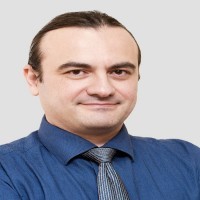


Prof. Ingrid Różyło-Kalinowska, MD, PhD, DSc.
Born March 16th, 1973 in Lublin, Poland.
Prof. Ingrid Różyło-Kalinowska is the Head of the Department of Dental and Maxillofacial Radiodiagnostics of the Medical University of Lublin. In the years 2020-24 she served as the vice-Dean of the Faculty of Medical Dentistry of this University, and member of the Senate of the University. She is specialist in radiology and diagnostic imaging.
Scientific work of Ingrid Różyło-Kalinowska includes over 350 full papers and over 350 conference contributions. She is supervisor of 16 completed PhD theses, 2 on-going PhD processes as well as of 11 MSc dissertations. She was reviewer of 28 PhD theses, including candidates from Belgium, Brazil and Denmark.
She completed 9 training periods abroad (Chile, Costa Rica, France, Jordan, Spain, Turkey, UK) including Erasmus Plus program.
Her didactic work includes dental radiography and radiology, maxillofacial radiology, medical radiology and diagnostic imaging, she was a lecturer at numerous international courses and workshops on dentomaxillofacial radiology as well as invited speaker (e.g. FDI World Dental Congress Istanbul 2024, San Francisco 2019, FDI Regional Congress, Riyadh, Saudi Arabia 2025, Digital Dental Society/IADMFR Congress in Venice, Italy, 2025, ICDMFR Kaoshiung, Taiwan 2017). She delivers webinars in Polish, in English (eg. FDI Oral Health Campus “Benefits and limitations of Cone-Beam Computed Tomography in Clinical Practice”, Indonesia, Turkey) as well as in Spanish (Chile, South America).
She is the Past President of the European Academy of DentoMaxilloFacial Radiology and member of the Junior Committee of the EADMFR. She hosted the 3rd Junior Meeting of the EADMFR in Lublin, Poland, in 2016 and the 18th European Congress of DentoMaxilloFacial Radiology in 2022. She is a member of the ERO-FDI Working Group Digitalisation in Dentistry - e-Health-Artificial Intelligence.
She is the Regional Director of International Association of Dentomaxillofacial in Europe, Central Board Member of the Polish Dental Association, the vice-Chairman and former Chairman of the Section of DentoMaxillofacial Radiology of the Polish Medical Radiological Society. She is Honorary Member of the Oral Diagnosis and Maxillofacial Radiology Society in Turkey.
She is the Editor-in-Chief of the “Journal of Stomatology”, the official journal of the Polish Dental Association. She belongs to the editorial boards of several scientific journals including “Dentomaxillofacial Radiology” and serves as a reviewer of numerous manuscripts submitted to international scientific journal.
She is author of the book “Imaging Techniques in Dental Radiology” (Springer, 2020), co-editor and co-author the book “Temporomandibular Joint Imaging” (Springer, 2018), co-author of the books: “Artificial Intelligence in Dentistry” (Springer, 2024), “Atlas of Cone-Beam Computed Tomography” (Wiley, 2022), “Atlas of Dentomaxillofacial Anatomical Imaging” (Springer 2022), “Ultrasonography in Dentomaxillofacial Diagnostics” (Springer, 2021), “Essentials of Dental Medicine” (Naklada Slap, Croatia, 2021). She is co-author of 5 dentomaxillofacial radiology textbooks in Polish, chapters on dentomaxillofacial radiology in 7 Polish textbooks. She translated 8 medical textbooks (including 3 on dental as well as head and neck radiology) from English or German to Polish.
I am director and assistant professor .


Language Editors
Burcu Batak
Ankara University Faculty of Dentistry, TR
Dilara Nur Şengün
Ankara University Faculty of Dentistry, TR
Özgür Irmak
Cyprus Near East University Faculty of Dentistry, CY
Kerem Ceyhan
Ankara University Scientific Article Writing Support Office, TR
Department of Oral and Maxillofacial Surgery, Ankara University Dentistry Faculty, Ankara, Turkey
Statistical Consultants
Afra Alkan
Ankara Yıldırım Beyazıt University, School of Medicine, TR
Ahmet Gül
Ankara University Faculty of Dentistry, TR
Uğur Toprak
Ankara University, TR

Editor in Chief


Associate Editors


Editorial Board




Scientific Advisory Board